
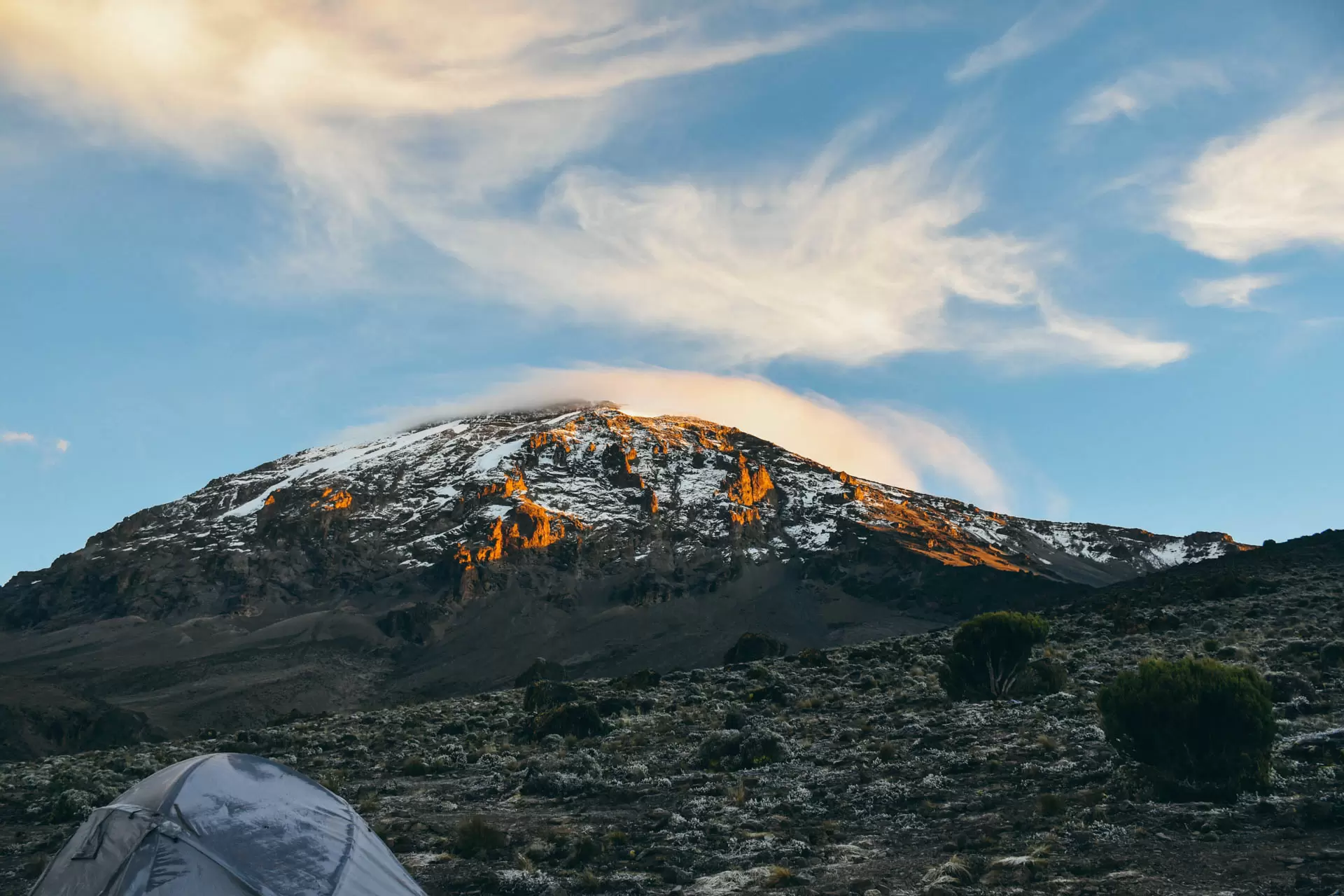
Reaching the summit of Mount Kilimanjaro is an adventure that challenges your body, strengthens your determination, and rewards you with one of the most extraordinary experiences in Africa. Rising to 5,895 metres above sea level, Kilimanjaro is the continent’s highest mountain, attracting travellers from around the world who dream of standing at Uhuru Peak and witnessing the sunrise above the clouds. If you are planning your climb, one of the first questions you are likely to ask is how long it takes to reach the summit. The answer depends on the route you choose, the number of days available, your acclimatisation needs, and the overall climbing plan. Most successful itineraries take between five and nine days on the mountain, with additional time needed for arrival, preparation, and recovery. At Back to Eden Adventure, we believe that climbing Kilimanjaro should never be a race against the clock. Giving yourself enough time to adjust to the altitude can make your journey more rewarding and support a safer, more enjoyable experience from the rainforest to the Roof of Africa.
How Many Days Does It Take to Climb Mount Kilimanjaro?
Most climbers spend between five and nine days trekking on Mount Kilimanjaro, depending on their chosen route and itinerary. Some routes can be completed in fewer days, but a longer climb generally allows more time for acclimatisation and a more gradual ascent. For many travellers, a seven- or eight-day mountain itinerary offers an appealing balance between time, physical demands, and the opportunity to adapt to the increasing altitude.
The number of days refers to the time spent climbing and descending the mountain. You should also allow time before the expedition to arrive in Tanzania, meet your climbing team, check your equipment, and attend the necessary briefing. After the descent, an additional night in Moshi or Arusha can provide an opportunity to rest before travelling home or continuing to a wildlife safari or Zanzibar. Your complete holiday may therefore be several days longer than the climb itself.
Although the number of days is important, the way those days are arranged matters just as much. Kilimanjaro is a high-altitude mountain, and your body needs time to adapt as you climb higher. A short itinerary may appear convenient, but it can leave less time for acclimatisation. Choosing a suitable route and allowing enough time for a gradual ascent can help you prepare for the demands of summit day.
How Long Does Each Kilimanjaro Route Take?
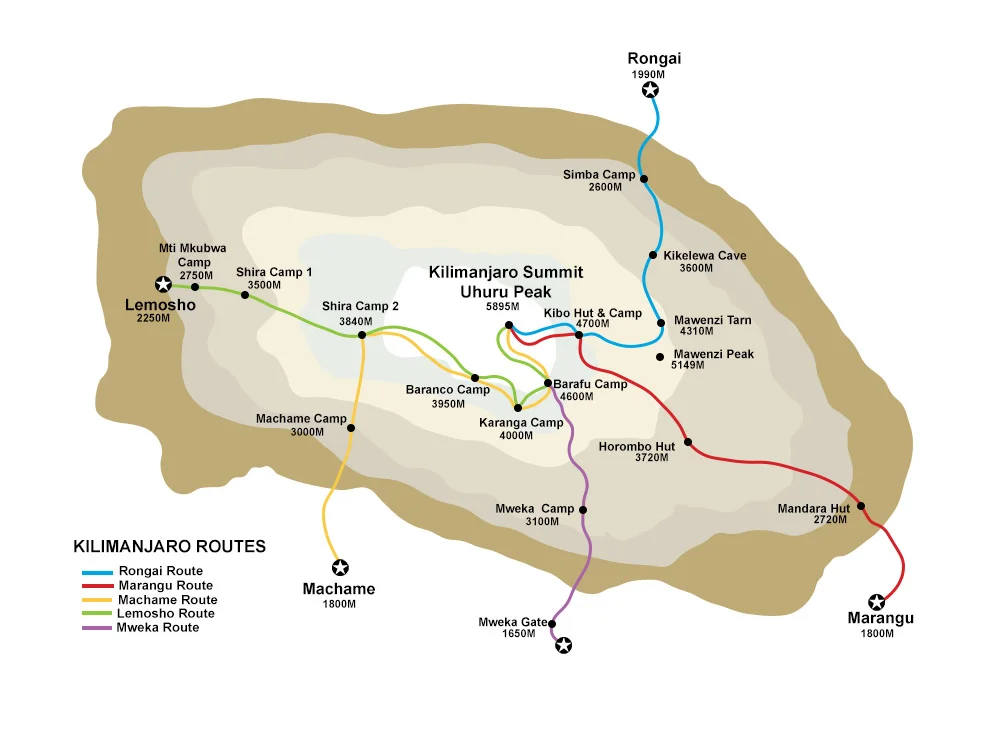
Kilimanjaro has several established climbing routes, each offering a different combination of scenery, duration, accommodation, and acclimatisation opportunities. The best route for you will depend on your available time, trekking experience, preferences, and the itinerary recommended by your operator.
1. Lemosho Route: 7–8 Days
The Lemosho Route is known for its beautiful scenery, remote-feeling early stages, and gradual approach to the mountain. The trail begins on the western side of Kilimanjaro, passing through lush rainforest before opening into expansive landscapes with views across the Shira Plateau. As the climb continues, the environment changes dramatically, revealing rocky ridges, alpine desert, and the high mountain terrain surrounding the summit.
A seven- or eight-day itinerary is commonly used for Lemosho, with the longer option allowing additional time for acclimatisation. It is an appealing choice for travellers who want a scenic trek and a more gradual progression towards higher elevations. The journey is physically demanding, but the variety of landscapes and the time spent adjusting to altitude can make it a rewarding option for many climbers.
2. Machame Route: 6–7 Days
Often called the Whiskey Route, the Machame Route is one of Kilimanjaro’s most popular approaches. It offers varied scenery, from dense rainforest to open moorland, rocky terrain, and high-altitude desert. The route also includes the dramatic Barranco Wall and sweeping views of the mountain’s southern slopes, giving the trek a strong sense of adventure.
Machame is commonly completed in six or seven days. The seven-day itinerary generally provides more time for acclimatisation and is often worth considering if your schedule allows it. The route includes some challenging ascents and descents, so it is important to be prepared for consecutive days of walking and to follow your guide’s recommended pace. Its scenic diversity and camping experience make it a popular choice for travellers seeking an active and memorable climb.
3. Marangu Route: 5–6 Days
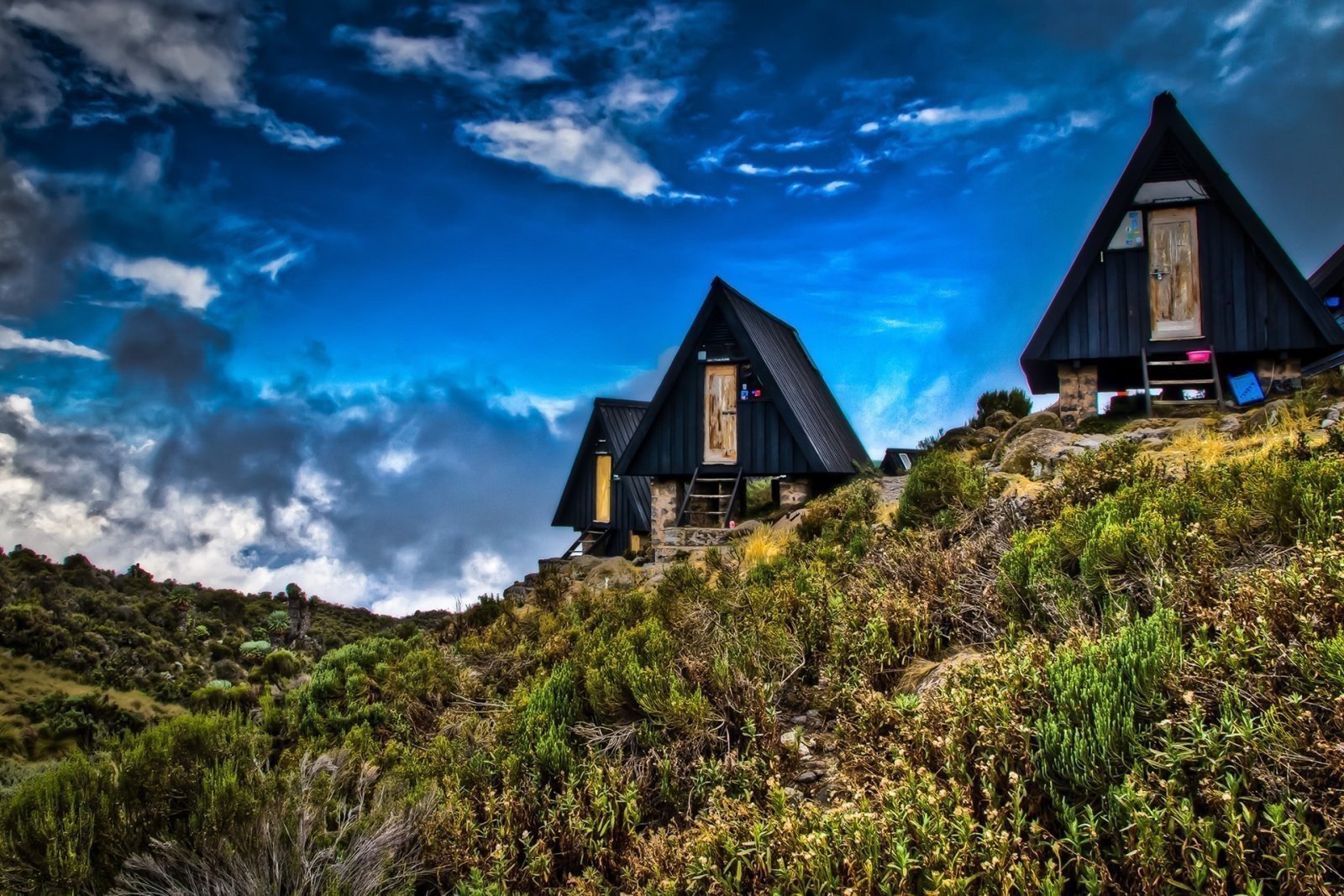
The Marangu Route approaches Kilimanjaro from the southeast and is distinctive because climbers stay in mountain huts rather than tents. The trail passes through rainforest, moorland, and high-altitude terrain before reaching the summit. Its hut accommodation can appeal to travellers who prefer not to sleep in tents, although the route remains physically challenging and summit night is still demanding.
Marangu is commonly offered as a five- or six-day climb. The shorter itinerary allows less time for acclimatisation, while the six-day option provides an additional day to help your body adjust to the altitude. Although Marangu is sometimes described as one of the easier routes because of its established trail and hut facilities, it should not be underestimated. Its relatively direct ascent profile can make altitude adjustment difficult for some climbers, so choosing an itinerary that allows sufficient acclimatisation is important.
4. Rongai Route: 6–7 Days
The Rongai Route approaches Kilimanjaro from the north, close to the Kenyan border. Compared with some of the busier southern approaches, it can offer a different atmosphere and a distinctive perspective on the mountain. The landscape changes from forested terrain to open moorland and alpine surroundings as the trail gradually climbs towards the summit.
Rongai is commonly completed in six or seven days, depending on the itinerary. It may appeal to travellers looking for a northern approach or a route that offers a different experience from the more frequently travelled trails. Weather conditions can differ between the northern and southern sides of the mountain, although no route is guaranteed to remain dry. As with every Kilimanjaro climb, your itinerary should balance the available time with a sensible ascent profile and adequate acclimatisation.
5. Northern Circuit Route: 8–9 Days
The Northern Circuit is Kilimanjaro’s longest established trekking route and is particularly attractive to climbers who have enough time to enjoy a gradual journey around the mountain. After beginning on the western side, the trail continues around the quieter northern slopes, offering expansive views and a more extended experience of Kilimanjaro’s changing landscapes.
An eight- or nine-day itinerary provides more time on the mountain than most other routes, allowing a more gradual ascent and additional opportunities for acclimatisation. This does not eliminate altitude-related risks, but the longer schedule can be a valuable advantage. The Northern Circuit is an excellent option for travellers who prioritise time, scenery, and a less hurried approach over completing the climb as quickly as possible.
6. Umbwe Route: Usually 6–7 Days or Longer with a Modified Itinerary
The Umbwe Route is a steep and direct approach from the southern side of Kilimanjaro. It climbs through forest and increasingly rugged terrain, offering a demanding ascent and dramatic mountain scenery. Because it gains altitude relatively quickly, it is generally better suited to experienced trekkers who understand the challenges of high-altitude climbing.
Umbwe itineraries vary, and some operators extend the route or connect it with other trails to provide more time for acclimatisation. It is not usually the first choice for travellers seeking a gradual introduction to Kilimanjaro. If you are considering this route, discuss your previous trekking experience, fitness, and acclimatisation plan with an experienced climbing operator before deciding.
Kilimanjaro Route Duration at a Glance
| Route | Common climbing duration | What makes it distinctive |
|---|---|---|
| Lemosho | 7–8 days | Scenic approach and gradual ascent |
| Machame | 6–7 days | Diverse landscapes and the Barranco Wall |
| Marangu | 5–6 days | Mountain huts instead of tents |
| Rongai | 6–7 days | Northern approach and a different perspective |
| Northern Circuit | 8–9 days | Longer itinerary with more time for acclimatisation |
| Umbwe | Varies; often 6–7 days or longer when extended | Steep, direct, demanding ascent |
These are common itinerary lengths, not fixed rules. Operators may offer different schedules, and the total number of days can change depending on the route variation and descent plan. When comparing climbs, check exactly how many days are spent on the mountain and how much time is allocated to acclimatisation.


Why Does Climbing Kilimanjaro Take So Many Days?
At first, it may seem surprising that climbing a mountain can take almost a week or longer, especially when the distance on a map appears manageable. Kilimanjaro, however, is not simply a long walk uphill. Its summit lies high above sea level, where the air pressure is lower and less oxygen is available with each breath. As you ascend, your body needs time to adjust to the changing conditions, and moving too quickly can increase the risk of altitude-related illness.
A typical climbing day may involve several hours of walking at a steady, controlled pace. You may cover a modest distance, but the combination of uneven terrain, increasing altitude, changing weather, and carrying the equipment required for the expedition makes each day physically demanding. Your guide will usually encourage a slow pace, often described by the Swahili phrase pole pole, meaning “slowly, slowly.” This approach helps you conserve energy and manage the gradual ascent.
The schedule also needs to include rest, meals, hydration, and time to prepare for the following day. Higher camps can be cold and exposed, and summit night is particularly demanding because climbers often begin walking around midnight to reach the summit near sunrise. After celebrating at Uhuru Peak, you must descend to a lower camp, making summit day one of the longest and most exhausting parts of the expedition. The number of days on your itinerary should therefore be determined by the overall journey and acclimatisation needs, not just the distance to the top.
Is a Shorter Kilimanjaro Climb Better?
A shorter climb can be attractive if you have limited holiday time, but fewer days do not necessarily mean a better experience. Short itineraries usually involve a faster ascent, leaving less time for the body to adjust to altitude. Even people with excellent physical fitness can experience altitude sickness, because fitness does not guarantee that your body will adapt quickly to lower oxygen levels.
A longer itinerary can offer a more gradual ascent, additional opportunities to rest, and more time to appreciate the mountain’s landscapes. It can also reduce the pressure of trying to complete a demanding journey within a very tight schedule. Although additional days increase the overall cost of the climb, they may be a worthwhile investment in the quality of your experience and your acclimatisation plan.
The right choice depends on your circumstances, but if your schedule and budget allow, consider prioritising an itinerary with sufficient acclimatisation time rather than choosing the shortest available option. Your climbing operator should explain the ascent profile and the reasons behind the recommended duration, helping you make an informed decision.
How Fit Do You Need to Be to Climb Kilimanjaro?
You do not need to be an elite athlete to climb Kilimanjaro, but you should prepare for several consecutive days of walking over changing terrain. Cardiovascular endurance, leg strength, balance, and the ability to remain active for extended periods can all help. Regular hiking is especially useful because it allows you to practise walking uphill and downhill, become comfortable with your boots, and understand how your body responds to a sustained effort.
A sensible training plan may include brisk walking, hill walking, stair climbing, hiking with a daypack, and strength exercises for your legs and core. Gradually increasing the duration of your sessions is generally more helpful than attempting a few extremely difficult workouts shortly before departure. If you have limited hiking experience, begin preparing well in advance and build up your endurance progressively.
Physical preparation is only part of the picture. Mental patience, appropriate equipment, hydration, nutrition, and willingness to follow your guide’s instructions are also important. On the mountain, moving slowly and communicating honestly about how you feel can be more valuable than trying to prove how fast or strong you are. A successful climb depends on respecting the conditions and making sensible decisions throughout the journey.
What Happens on Summit Day?
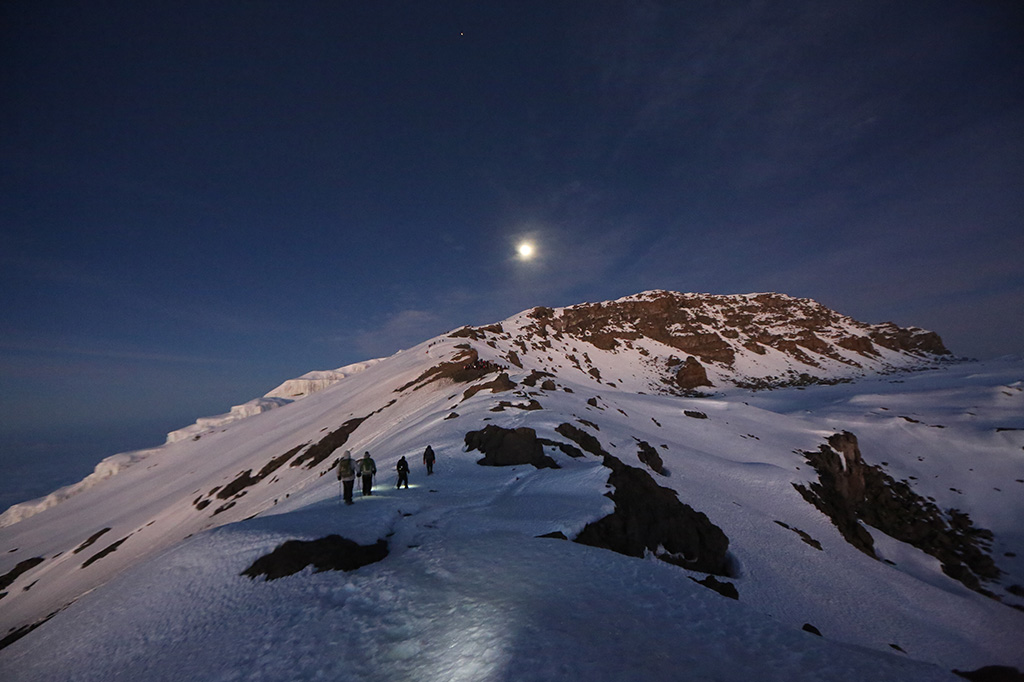
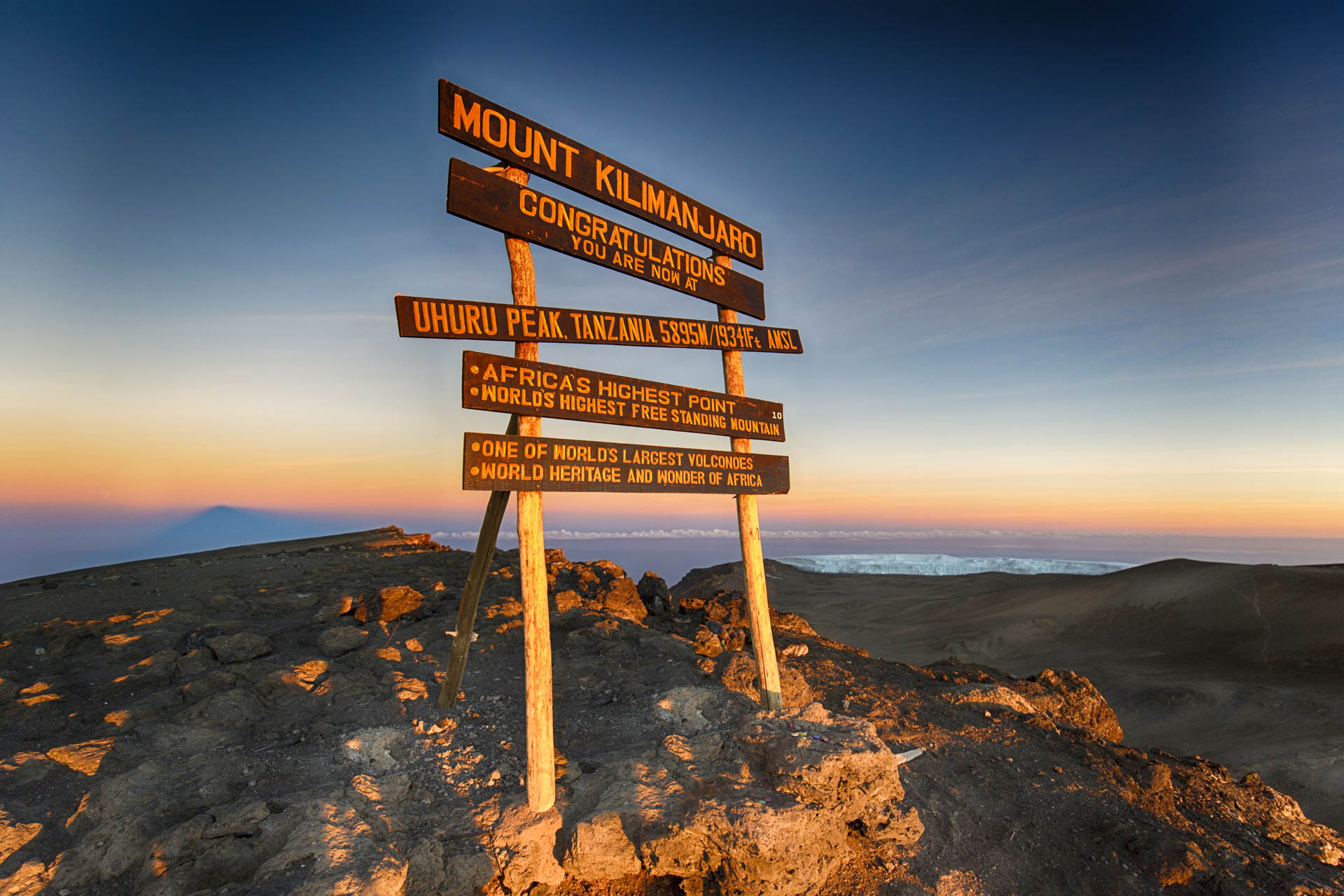
Summit day is often the most anticipated and challenging part of the entire expedition. Depending on your route and camp location, the final ascent usually begins late at night or around midnight. Climbers move slowly through the darkness, guided by headlamps, as they make their way towards the crater rim and the summit area. The cold can be intense, and the combination of altitude, steep terrain, and limited sleep makes every step an exercise in patience and determination.
As the sky begins to brighten, the landscape gradually emerges from the darkness. For climbers who reach the summit, the moment of standing at Uhuru Peak can be deeply emotional. Some celebrate quietly, others take photographs or embrace their climbing companions, and many simply pause to appreciate the achievement. Yet reaching the top is only part of the day. After spending a short time at the summit, climbers begin descending, often travelling several more hours to reach a lower camp.
This is why it is important not to judge the difficulty of Kilimanjaro solely by the summit distance. The final ascent and descent require energy, preparation, and careful attention to your condition. Your guides will monitor the group and help make decisions based on the circumstances. Reaching the summit is an incredible goal, but returning safely is always the most important part of the achievement.
How Many Days Should You Allow for Your Complete Kilimanjaro Holiday?
When planning your trip, remember that the climbing itinerary is only one part of your holiday. You will usually need to arrive in Tanzania before the expedition begins, allowing time to meet your guide, attend a briefing, and check or hire equipment. After descending, a recovery night is often a sensible choice before a long journey or onward travel.
For example, if you select a seven-day climb, you may wish to allow an additional day before the expedition for gear checking and another day after the descent. International flight schedules and travel connections may require more time. If you are combining Kilimanjaro with a safari or a beach holiday, plan enough days to enjoy those experiences without rushing straight from one demanding activity to another.
A climb followed by a wildlife safari can be a remarkable way to experience Tanzania. You could spend several days trekking through Kilimanjaro’s ecological zones, recover in Moshi or Arusha, and then travel into the wilderness to discover elephants, giraffes, lions, and other wildlife. Alternatively, you could finish your adventure on Zanzibar, where the beaches and warm Indian Ocean offer a relaxing contrast to the cold, high-altitude environment of the mountain.
Climb Kilimanjaro with Back to Eden Adventure
Every Kilimanjaro journey begins with a personal reason. You may be chasing a lifelong dream, celebrating a milestone, challenging yourself physically, or seeking the satisfaction of standing on the highest point in Africa. Whatever inspires you, choosing the right route and allowing enough time can make a significant difference to your experience.
At Back to Eden Adventure, we help you plan a climb that reflects your available time, experience, and goals. From choosing between the scenic Lemosho Route, the popular Machame Route, the hut-based Marangu Route, or the longer Northern Circuit, we help you understand the options and plan an itinerary that gives appropriate attention to acclimatisation and safety. We can also help you combine your mountain adventure with a Tanzania safari or a Zanzibar escape, creating a journey that brings together achievement, wildlife, and relaxation.
The climb will ask for patience and determination, and there may be moments when the next step feels difficult. But with thoughtful preparation, an appropriate itinerary, and experienced mountain support, you can give yourself the best possible foundation for the adventure ahead. The goal is not simply to reach the summit as quickly as possible. It is to experience the mountain responsibly, appreciate the journey, and return home with a story you will always be proud to tell.
Ready to begin your journey to the Roof of Africa? Contact Back to Eden Adventure to plan your Kilimanjaro climb and discover the route and duration that suit you best.